Starting Robotics at a Young Age
With things changing quickly in the world today, starting in robotics for kids at a young age is just as important as starting in STEM (Science, Technology, Engineering, and Mathematics) fields. Robotics for kids serves as a wonderful introduction to STEM for children, and it encourages them to think and reason critically, be creative, and apply their minds to real-world challenges.
Getting involved as a parent by helping out around the house, or as a teacher planning STEM-relevant focused STEM challenges to engage students, the starting point is knowing robotics. With the help of this robotics kit guide, you will be able to begin to foster curiosity, grit, cooperation, and robotics kits for varying ages will be discussed as well.
In this discussion, we will highlight the ways you can help children learn the skills that will allow them to become the innovators of the future and the roles you can take to help steer them during their critical developmental years.
Why Learn Robotics?
Today, robotics for kids is a new emerging field, and having the proper robotics kit during the early years can be quite beneficial. Robotics for kids is not limited to the hardware side.
For parents, integrating robotics lessons stimulates hands-on learning. Depending on the child’s age, robotics kits and step-by-step guided projects can be mastered. Robotics instills the ability to think independently, sustain focus, and many other qualities that lead to lifelong success.
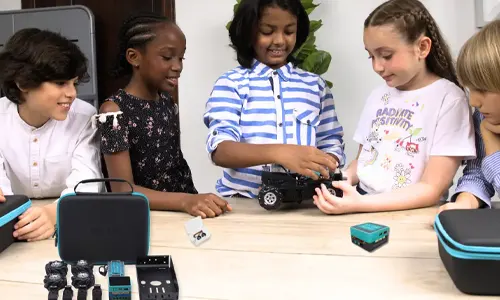
For educators, Robotics for Kids is a powerful tool to teach STEM in a more dynamic and integrated framework. The interdisciplinary nature of robotics makes it enjoyable and sharpens creative problem-solving skills. Robotics also promotes teamwork as learners share concepts, design, build, and troubleshoot their projects together.
What’s more, robotics promotes early coding and technology literacy. Robotics might seem simple at first glance, but these interactions can ignite a child’s imagination and creativity during their formative years.
Having an open mind to learn alongside a child or student is a marvelous starting point. Robotics for Kids helps parents and teachers instill innovation and confidence along with a love of learning.
Robotics Workshop for Kids – When and How
STEM learning is incredibly beneficial for students when integrated at an early age, and robotics is best practised for children ages 5 to 7. During these ages, children become curious about the world, and Robotics for Kids helps polish their interest. Robotics for Kids is best taught with age-appropriate kits that revolve around simple machines and basic concepts.
Kids around 8 to 10 years of age start becoming more independent, and that is the best time to start teaching automation, introduction to coding, and other concepts. Structured lesson plans with programmable robots can be taught to children in this age group. Middle school students can focus on mastering advanced robotics, which includes complex problem solving, teamwork, and even competition.
Robotics can be taught at an early stage as well as at an advanced level. Encourage students to be open and imaginative in their thinking instead of focusing on exactness in robotics.
To help develop logical coherence and problem-solving stubbornness, parents and teachers as guides and instructors are instrumental. Children should be guided in a play framework that allows them to realise their ideas and to fail. Doing so enables rapid learning and confidence-building.
Introducing Robotics for Kids early and in a systematic framework fosters active, playful participation in learning STEM, paving the way for future success.
Best Kits and Tools to Get Started with Robotics for Kids
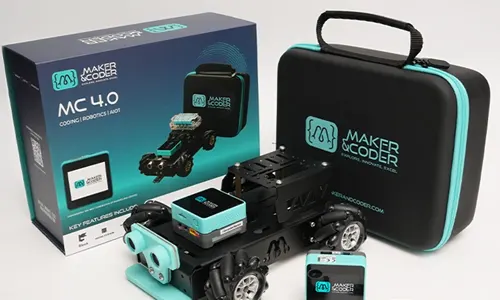
Getting started with Robotics for Kids no longer has to be a headache. With the right tools and kits, kids can engage with STEM concepts and apply what they learn in a hands-on manner. As for beginners, there are age-appropriate robotics kits designed for them. These kits cover basic electronics, programming, and problem-solving, ensuring kids receive hands-on robotics that is age-appropriate.
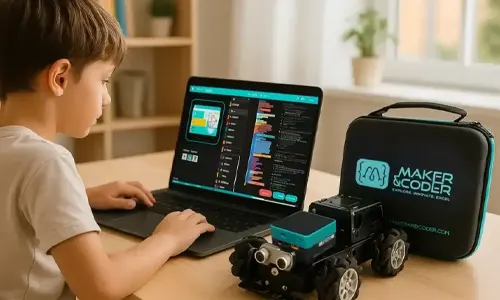
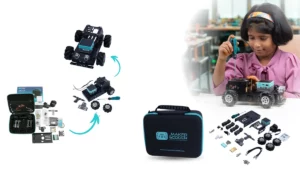
To spark interest in robotics, fillable guides, visual and coding tools like Scratch and Blockly, and plug-and-play provide crucial teaching aids. The kits supplied contain sensors, motors, and programmable boards. This equipment enables kids to build functional and interactive models like cars and robots.
Both parents and teachers should consider the appropriate learning levels for children when selecting kits available to them. The Robotics for Kids programme offers school-friendly kits that include ready-to-teach, lesson-based instructions designed for STEM learning. These kits are also ideal for homeschooling.
If you want to spark interest or cultivate a child’s existing interest in technology, a robotics kit can aid in the early stages of a child’s innovation journey.
Education in the Robotics for Kids category is stepping further into the digital age, making the parent’s contribution in Robotics for Kids at Home increasingly essential. While technology has always been incorporated into learning, robotics has recently emerged as a powerful resource. It provides children with vital STEM skills, such as coding, and even problem-solving and critical thinking. However, to maximise the benefits of such a rich educational experience, children need encouragement and active participation from their parents.

Experience in engineering is not a prerequisite when it comes to robotics kits
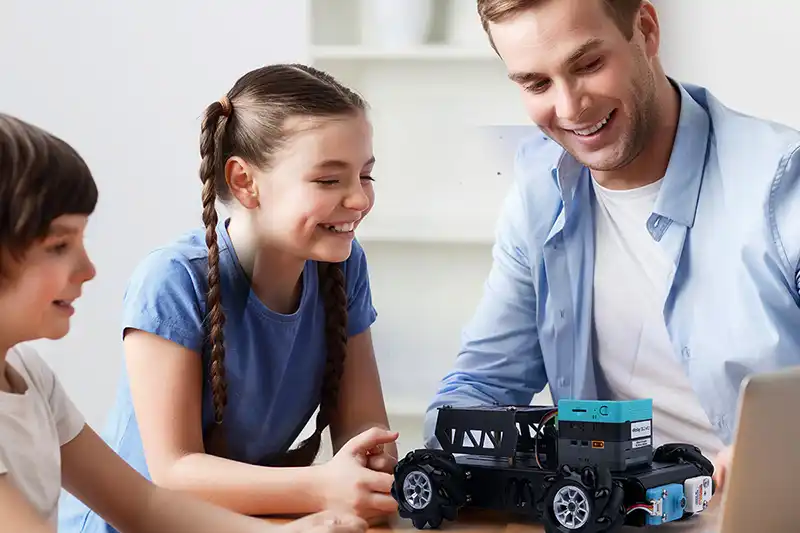
The initial step is to create a welcoming environment, which includes a workspace, elementary robotics kits, and room to explore. Watching robotics videos and taking online workshops are ways parents can engage in simple robotics activities.
Educators can tailor lessons and incorporate robotics to programme and control devices. For example, maths classes may focus on measurement and calculation operations using robots, while in science classes, students may learn about data collection with sensors and basic motion mechanics. Younger students learn basic sequencing and logic programming with robotics through Scratch and Blockly, visual coding platforms.
The inclusion of Robotics for Kids aids in supporting collaborative learning. Group projects teach collaboration, communication, and problem-solving skills that are pertinent in school and will benefit students in their careers. Moreover, robotics competitions and classroom challenges promote creativity in students while providing healthy competition.
Schools are not hindered by a lack of facilities, as they can use low-cost robotics kits, free online materials, and appropriate age platforms. Teachers ought to be equipped with the right materials so that they can transform their classrooms into Innovation centres that enable students to interact with the future and use technologies in positive ways.
Robotics for Kids goes beyond the machines. For the right reasons, it can help children of all ages cultivate curiosity, resilience, and a readiness to learn for the rest of their lives.
Robotics Competitions for Kids: Where Learning Meets Excitement
Robotics competitions for kids have gained recognition for their ability to integrate academic content with kinetic, intellectually stimulating activity. Participants in robotics competitions for kids translate theoretical concepts into functioning prototypes, encountering the complexities and serendipity of engineering practice. Accordingly, the settings foster not merely cognitive skills such as engineering, coding, and data analysis, but also affective dimensions: collaboration, negotiation, and iterative problem-solving — all of which form the foundation of robotics for kids education.
Teams in robotics competitions for kids are typically presented with the task of designing, constructing, and programming autonomous or semi-autonomous mobile devices intended to achieve specified objectives within timed segments. Goals may range from navigating obstacle-laden fields to completing precision tasks such as projectile delivery or sensor-based retrieval. Regardless of variation in task structure, emphasis remains consistent: robotics for kids initiatives must synthesise scientific principles, manage resources, and evaluate sensor feedback, all while communicating tasks and strategies collectively.
Quantitative change in learner disposition often follows. Participants engaged in robotics for kids programs report heightened self-efficacy, evidenced by their willingness to assume roles outside personal comfort zones, such as leading a mock trial of the robot design or troubleshooting one of its sensors mid-competition. Encountering and analysing breakdowns—both mechanical and logical—encourages iterative refinement and temperamental fortitude.
Robotics Projects for Kids: Simple Builds, Strong Skills
Parents and educators regard robotics projects for kids as potent complements to classroom instruction in the STEM disciplines, since they situate both factual knowledge and procedural literacy within contexts of authentic application. Longitudinally, such exposure to robotics for kids is believed to sustain academic interest in advanced mathematics and science, while also cultivating the technical fluency now vital for occupations in an increasingly automated economy.
Robotics for kids initiatives designed for young learners serve as an effective portal into STEM disciplines by coupling theoretical knowledge with tactile experience. Throughout craft-like assemblies in robotics projects for kids, children confront the core domains of mechanics, circuitry, and programming, translating abstract concepts into working artefacts that embody their imaginations.
Each build in robotics projects for kids typically illuminates a discrete scientific principle—kinematic motion, light-sensing, or auditory response. Commercial and open-source robotics for kids kits deliver a guided pathway of incremental procedures but equally invite open-ended tinkering. When learners confront mechanical binding or errant circuitry, the resultant iterations foster analytical thinking and adaptive reasoning—skills that emerge more powerfully through repeated failure and corrective reflection than through rote instruction.
Such robotics projects for kids fit cohesively within formal science curricula or informal learning spaces at home and in extracurricular clubs. Demonstration day occasions, wherein mini-robots navigate obstacle courses or perform rudimentary dances, serve as communal exhibitions that validate the learner’s effort and imagination.
Continued engagement with robotics for kids catalyses a gradual but meaningful acculturation into an innovative mindset. Young builders grow accustomed to the rhythms of hypothesis, construction, testing, and refinement. Discrepant results—like a planned obstacle-avoidance routine that fails—become the impetus for re-engineering and deeper conceptual reasoning, rather than demoralisation.
When exposure to iterative robotics projects for kids is sustained, children cultivate a malleable foundation for advanced inquiry, entrepreneurial thinking, and lifelong participation in STEM disciplines. Educators increasingly recognise robotics for kids instruction in primary and secondary school settings as a catalytic method for enriching STEM education. By situating lessons in science, technology, engineering, and mathematics within the context of robotic design and programming, instructors promote active, inquiry-driven learning that connects theoretical concepts with real-world technology.
Robotics for Kids in Schools: Creating Future-Ready Classrooms
In robotics-enhanced classrooms, students are invited to construct, code, and evaluate prototype robots. These activities dovetail with established curricular standards and enable the reinforcement of foundational concepts in novel, kinesthetic manners. Collaborative design challenges are frequently employed to cultivate communication and cooperative problem-solving skills that are essential both in academic inquiry and in the modern workforce.
Educators are supplied with curricular guides, professional-development modules, and age-appropriate, student-centred resources that demystify robotic instruction and allow effective implementation regardless of the teacher’s prior technical experience. Robotics for kids in school is supported through commercial robotics kits that are selected for their developmental suitability and their alignment with targeted learning outcomes, ensuring that students progress developmentally from simple sensors to complex competitive robots.
Evidence indicates that robotics instruction increases student motivation, enhances analytical reasoning, and nurtures self-directed learning. Abstract principles, whether in mechanics, programming logic, or data analysis, gain clarity and retention when students manipulate sensors, motors, and microcontrollers in iterative design cycles.
As robotics for kids in school gains broader acceptance in the educational landscape, learners acquire not only disciplinary expertise but also transversal competencies—algorithmic thinking, systems design, and resilience in the face of iterative failure—essential for success in a technology-infused 21st-century economy.
Important Skills Young Children Will Learn Through Robotics for Kids
Working with wires and sensors could be perceived as simple play, but in fact, it is a much more powerful tool to develop skills that children will need in the future. Kids learn and enhance a variety of cognitive, social, and technical skills when they construct, code, and debug robots.
Problem-solving skills are one of the most important skills kids are developing and are now possessed by children at a younger age. This is a result of robotics, and kids now can make a robot move in a specific direction and even debug programmes. They enhance their logic and sequencing skills by working on simple programmes as well.
Robotics promotes creativity and innovation. Designing and developing a one-of-a-kind robot that solves specific problems is a creative venture. Such activities also develop fine motor skills and hand-eye coordination during the assembly of the detailed components.
Working in teams is a well-known way to boost one’s communication skills and is encouraged both at home and in the classroom. Robotics has also been noted to be a unique blend of technical and soft skills, making it a versatile discipline of skill development.
Robotics for Kids prepares children for life and future careers by offering them the essential skills they need to succeed in life. Robotics for Kids provides numerous materials and resources to help children learn STEM, making it easy for teachers and parents to enhance lessons and inspire creativity and innovation both in the classroom and at home.
Projects with light-sensing and line-following bots, as well as robotic pets that children build with motors and household objects, help to nourish creativity and reinforce teamwork while teaching the fundamentals of basic electronics.
Robotics for Kids can help teach STEM classes like maths and science. Try having students programme robots to navigate mazes or develop in-class delivery systems.
To enhance children’s motivation, they can be tasked with redesigning improvements they have made to their initial designs. Failure is at the core of the robotic process, and the path to success is through creativity and iterative refinement.
The right tools and support transform something as mundane as a robotics subject into a true journey of discovery for kids.
Finding and Solving Educational Robotics Challenges for Kids
With Explore My City, Robotics for Kids offers the opportunity to explore STEM subjects. It does come with challenges, though. A good number of young learners tend to struggle with grasping the concepts of basic coding, complex sequences, and even focusing during the execution of the tasks. These challenges, along with the right approaches, are a good basis to turn into helpful learning experiences.
To begin with, kids not getting things to work the first time often lead to frustration. When robots are involved, it is even easier to stub a toe. Many expect things to work seamlessly. Rather than embracing defeat, shifting to a growth mindset is important during times when things are not working, as well as embracing the process of failure to achieve success. Managing the sequence of tiny steps helps make the test seemless daunting and the journey less overwhelming.
One of the challenges that arises in the case of children’s robotics is their differing interests. Some children may enjoy building things physically, while others would prefer group problem-solving, visual coding, or working in a team.
Unfortunately, the right tools or clear steps must be provided in advance; otherwise, the achievement already made might be lost. To collaboratively solve the challenge, stakeholders like educators and parents can turn to learning materials such as beginner kits, lesson plans, how-to videos, and detailed outlines to ensure the appropriate tools are provided.
If we support children in solving robotics challenges, the subject becomes a lot more engaging, and the experience can be immensely gratifying.
Taking Learning Further Robotics for Kids
Around this age, children are ready to move from simple plug-and-play kits to more sophisticated and multi-faceted projects that combine coding, engineering, and even solving real-world problems.
Kids can explore using programmable sensors, automation, or even AI with advanced robotics. Understanding the concepts of Arduino, Raspberry Pi, or block programming with Scratch and Blockly can aid in learning. These children’s robotics kits allow for the building of intelligent robots that can navigate through mazes, follow light, detect and avoid obstacles, or respond to voice commands. This sharpens logical thinking and creativity.
Teachers and parents, this is the time to promote self-driven exploration. Join STEM clubs, Robotics Competitions, or group projects that encourage self-directed learning. These activities enhance self-esteem and strengthen technical skills, paired with collaboration, persistence, and planning.
It’s aimed at building self-esteem to boost creativity and problem-solving skills. It is also essential to equip the children with skills for an upcoming reality where technology will not be simply used, but it will be advanced and innovated by them.
Developing a Robotic Collaborative Future with Parents and Teachers for Kids
Parents play a significant role in reinforcing the concepts learned in the classroom due to the different roles they have in a child’s life. This partnership not only fosters a positive attitude towards learning but also motivates the child to excel in STEM
Educators can guide parents in keeping up with classroom robotics projects by recommending relevant robotics kits and sharing progress with parents. On their part, parents can facilitate learning during the homework phase by engaging the child with weekend hobby sessions, instructional challenges, or robotics kits. This positive participation improves motivation and aids in better learning.
The approach to robotics for kids fosters the development of communication, responsibility, and critical thinking. When parents and teachers work together, students feel appreciated and adequately prepared to tackle challenges in robotic innovations.
Schools can enhance this collaboration with parents by hosting robotics fairs, coding activities with parents and children, or even STEM workshops. These activities help parents appreciate what their children are learning, stimulate interest, and cultivate a passion for technology.
By strengthening the connection between home and school, we can make Robotics for Kids a joint initiative. We can nurture and motivate the children who will be responsible for the innovations and advancements of the future.
FAQs – Robotics for Kids: A Guide for Parents and Teachers
Q1. At what age should a child be introduced to robotics?
A child can begin participating in basic robotics activities with simple kits by the age of 5. As they age, they will be able to complete more advanced tasks such as programming and sensor integration.
Q2. What are the advantages of teaching robotics to children?
Robotics improves a child’s critical thinking, creativity, and problem-solving abilities. STEM (Science, Technology, Engineering, and Maths) is introduced early, teaching teamwork and self-assurance.
Q3. Is prior coding knowledge necessary for learning robotics?
No. Prior experience is not necessary with coding, as most beginner robotics kits are equipped with simple, drag-and-drop visual programming.
Q5. How can parents encourage robotics-based activities among their kids?
By providing robotics kits, subscribing to clubs or classes, and taking part in STEM Take-Home activities that encourage group learning, parents can cultivate curiosity.
Q6. In what ways can teachers incorporate robotics in their classes?
Robotics can be learned in science or computer classes, during project-based learning, or in after-school clubs. Many educational kits come with curriculum guides, offering valuable materials for lessons.
Q7. In your opinion, is robotics a safe activity for children to engage in?
Yes, in most cases. Robotics kits designed for children are generally safe and age-appropriate. Like with most toys, children are best supervised by adults, especially younger children or during age-appropriate electrical or tool parts usage.
Q8. In your view, what are some of the robotics skills children can learn?
With robotics, children learn practical logical thinking, algorithmic problem solving, cognitive spatial skills, mechanical assembly and teamwork, time management, and more.